A Professional Employer Organization (PEO), such as ADP TotalSource®, takes on complicated, time-consuming administrative HR tasks most often related to HR, payroll, benefits and compliance, providing small businesses with scalable infrastructure, compliance expertise and economy of scale. It’s the smart answer for growing small businesses, because this kind of support gives companies more freedom to focus on the most vital aspects of their business, and the confidence to grow knowing that their HR challenges are handled by experienced HR professionals.
This is crucial, because expanding into and hiring in a new state brings new layers of compliance, payroll and operational requirements, along with a raft of state and local unemployment laws. These laws and regulations are often centered on workers’ compensation, state unemployment, benefits insurance plans and rules, payroll and tax setup, PTO provisions, 401(k) obligations, and HR policies and termination rules. Partnering with a PEO can help to significantly reduce a business’s administrative headaches, making growth and expansion a smoother prospect, and leaving more time to focus on core business issues.
Table of Contents
Avalon Park Group, a Florida-based real estate developer, relies on ADP TotalSource to help them manage multi-state compliance requirements.
If we didn’t have ADP’s support, it would be very challenging for us to navigate compliance and regulations across different states.
Mari Robles HR Director,
Avalon Park Group
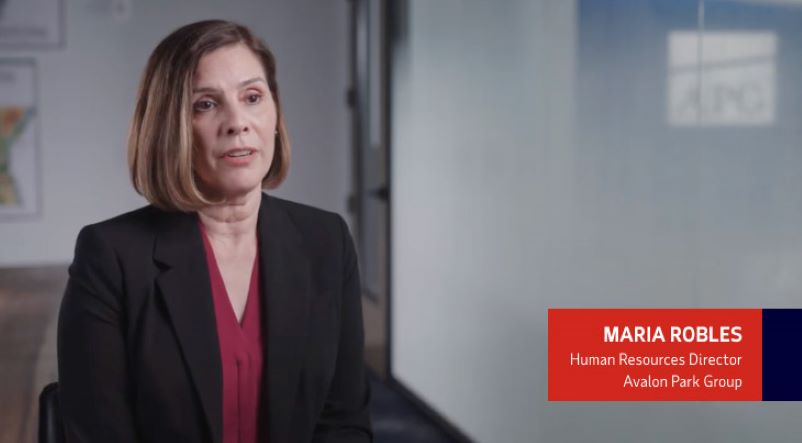
Watch this case study to see how real estate developer Avalon Park Group managed the HR complexities of multistate expansion and acquisitions by partnering with ADP TotalSource.
5 common issues that growing small businesses face
Scaling a business, especially into a second or third state, creates administrative and HR-related compliance challenges that an internal HR team or current technology may not be equipped to handle. Here are five of the most common problems for growing small businesses.
Multi-state payroll regulations
It’s crucial to keep in mind that payroll laws and regulations vary from state to state‚ and businesses must be in compliance in each respective state. States have their own unique rules for taxes, wage laws, new hire reporting and more. It’s easy to lose track of these disparate requirements especially at a time of rapid growth. Failing to meet any of these requirements can potentially result in fines or penalties.
Wage & hour law variance
Multi-state operation adds layers of risk related to wage and hour laws, including overtime calculations, paid sick leave and final pay deadlines, all of which can vary from state to state. It is critical to be completely up-to-date on all wage and hour laws in every state in which you intend to expand.
The complexity of benefits and benefits administration
As you grow into new states, offering benefits, and in particular healthcare, becomes much more complex, owing to factors such as carrier options, healthcare systems and state-level policies. With a PEO, smaller businesses can offer a larger range of benefits and plans than they’re eligible for on their own, while gaining the risk management that minimizes long-term cost volatility and the administrative relief that comes with a PEO.
In a PEO relationship, there’s no need to limit your offerings simply because you don’t have the bandwidth to manage it all. This is a huge win for small businesses, and that gain is multiplied when operating across multiple states. With a PEO, employees can choose from the plan types (such as PPO, HMO, EPO, HDHP, OAMC, POS) and carriers that fit their needs. And because the PEO takes on the administrative portion, there’s no additional work on a small business’s end.
A PEO is built to handle plan design, enrollments, compliance, employee communication and questions, payroll deductions, reconciliations, recordkeeping, terminations, year-round life changes and more.
Workers’ compensation and risk management
Securing and managing workers' compensation across multiple states can be a confusing, fragmented and time-consuming process. For many growing businesses, trying to handle workers’ comp without the support of a professional is one of the trickiest parts of growing into new states. PEOs can help with:
- Navigating different states and rules: Workers’ comp classifications, rates and reporting vary from state to state. A PEO will assist by centralizing compliance and filings across all states so employers stay protected.
- Managing multi-state claims and communication: Coordinating claims, medical networks and adjusters across jurisdictions is both time-consuming and risky. With a PEO like ADP TotalSource, integrated claims management and risk specialists handle multi-state claims seamlessly, ensuring consistency, faster return-to-work rates and lower loss costs.
- Keeping coverage consistent during growth: Adding locations, remote staff or expanding into new states can leave coverage holes if not managed proactively. A PEO monitors growth in real time, updating classifications, payroll and policies so that your protection grows with your business, even in times of rapid expansion.
Too many platforms and tools
Uncountable hours have been lost to data transfer and duplicate entry across multiple systems for payroll, benefits and time. Even worse are the errors that often accompany this tedious process. This administrative overload pulls key team members away from building a viable strategy that leads to sustainable growth.
Something that can get overlooked, though, is that utilizing too many platforms or tools can greatly increase the risk of a data-security issue. Each new location where data is stored is a new risk, and different providers will have differing approaches to data and security. You can never see all of your most important information at a single glance, which can cause analytics to become fragmented. Keeping vital data on a single platform helps to ensure that your data remains safer and more easily accessible to you.
How can a PEO make growth more seamless?
A PEO like ADP TotalSource works directly with businesses to provide a scalable foundation for growth. First, a PEO acts as a dedicated HR advisor who understands the unique requirements a company must meet to do business in each state it operates in. Especially important to this is knowing how best to attract and retain talent in different markets, thus making growth a natural process across multiple locations. Second, a PEO always knows the compliance requirements and policies for each state, allowing you to operate with peace of mind knowing that your payroll, HR, benefits and time-tracking are all covered at every location of business. Check out this list of how PEOs help small and midsized businesses grow seamlessly:
Blue-chip benefits access and buying power
A PEO pools its clients' employees, meaning even the smallest businesses gain access to benefits (health, dental, 401(k), vision, mental health, health advocacy, pet wellness) traditionally associated with large corporations. The PEO manages benefits administration, vendor management and mandatory ACA reporting.
A single, multi-state payroll and compliance engine
The PEO performs all required payroll registrations and tax filings in all states where you have employees, and regularly monitors thousands of federal, state and local laws, working to help keep you in compliance as they change.
Managing workers’ comp risk and claims across states
The PEO handles the complexities of workers’ comp, including reporting, rates and classification, across states to help keep businesses from being penalized. On top of that, the PEO also handles claims and updates payroll, policies and classifications proactively, so that as businesses grow they are covered in each new jurisdiction.
Save time and reduce errors with one integrated HR workflow
A PEO like ADP TotalSource will provide a single, integrated HR platform for payroll, benefits, time-tracking and more. This consolidates and streamlines administrative work, improves data accuracy and creates a streamlined experience for employees and managers. With a PEO, businesses won’t have to go through the hassle of juggling multiple platforms and tools. And beyond technology, the people expertise provided by a PEO will help you to manage the various aspects of running a business, keeping things streamlined and simpler than they otherwise might be.
Does a PEO make sense for my business?
If your business is growing, you’re likely facing some of the many challenges that accompany growth, meaning a PEO may be an ideal solution for your business. PEOs can be most impactful when your administrative workload is rising faster than your team’s internal capacity to perform it. Consider a PEO if your business is or is about to encounter any of these situations:
- Second state expansion: You're hiring your first employee outside your home state
- Hiring increase: You plan to add new employees and your HR and onboarding processes are already under strain
- Benefits demands: You dread annual benefits planning and the open enrollment period because of the time commitment and complexity, or are worried that your business isn’t competitive when it comes to offering benefits packages
- Compliance risk: You’re worried about payroll or compliance audits and don't feel confident in your business’s policies or record-keeping
- Tool sprawl: You work on multiple, disconnected systems for your HR and payroll needs
- Scaling: Your business is growing and you need to add infrastructure to take it to the next level
- Lack of bandwidth: Your business has a reactive approach to payroll, benefits and compliance because your staff is stretched too thin
- Experience gap: You encounter requirements and employee-related issues that are beyond your level of expertise, and could use a built-in advisor that doesn’t charge exorbitant hourly rates
PEOs by the numbers
A PEO is made to save time, reduce risk and offer ongoing support. Businesses in a PEO relationship:
- Are likely to grow twice as fast
- Experience 12% lower employee turnover
- Are 50% less likely to go out of business
- Report higher employee satisfaction and engagement
*Source: NAPEO Research & Data, July 9, 2025
Learn more about ADP’s PEO
Check out these helpful resources to see more about how a PEO like ADP TotalSource can help your growing business.
- ADP TotalSource Overview
- ADP TotalSource Features
- What is the cost of a PEO?
- Compare PEOs: ADP TotalSource vs. Justworks
- Compare PEOs: ADP TotalSource vs. Trinet
- Compare PEOs: ADP TotalSource vs. Insperity

Ready to discuss your specific multi-state expansion plans and HR needs with a PEO specialist?
Book a Multi-State Roadmap SessionFAQs about PEOs
Does a PEO make it easier to hire in new states?
Absolutely. Some PEOs, like ADP TotalSource, are registered to handle payroll and taxes in all 50 states. When you partner with a PEO like this, your primary task is simply onboarding the employee. This can reduce the time from weeks for manual registration to potentially days.
What HR and compliance tasks does a PEO handle vs what we keep?
This can vary by need, but in this relationship, the PEO generally handles payroll processing and tax filing, benefits plan design, benefits administration, workers’ comp policy and claims management, HR compliance monitoring, employee onboarding “paperwork” automation, and the HR technology and data security. The business will continue to manage things such as hiring and termination decisions, employee reviews, salary decisions, company culture and general day-to-day employee management.
Think of a PEO as both a consultant and a back-office administrative support engine. A PEO pairs expert consultation personalized for your business with behind-the-scenes experts who assist with challenges including but not limited to benefits plan design, risk management, data security and compliance monitoring. You’ll also get support with task management, technology support and more from the PEO’s specialty staff. This powerful mix of support and technology provides a flexible foundation for growing small businesses.
Does a PEO replace HR?
A PEO is an enhancement to how you handle HR within your business. Whether “HR” at your business is handled by a Human Resources professional, COO, CFO, Controller, or office manager, a PEO acts as a strategic and administrative partner to the person or people handling HR tasks for your business. You still own core HR decisions such as hiring, terminations, culture, performance and compensation. The PEO becomes your trusted advisor to help you make those decisions, grounded in its experience, best practices, and understanding of what each business is looking to achieve. The PEO also handles the complex, time-consuming administrative tasks associated with those decisions. This sharing of certain employment responsibilities is at the crux of the PEO relationship, which is also referred to as a co-employment or third-party payer arrangement.
Can a PEO help manage open enrollment across states?
Yes, but not all PEOs can handle this. When researching PEOs, make sure you know what state(s) it supports. The PEO should act as a central hub for benefits enrollment, communication and administration, regardless of where a business is located or employees reside. PEOs like ADP TotalSource are built to support employees in all 50 states.
How does a PEO impact workers’ comp and safety programs?
PEOs can help to create safer workplaces for small businesses. A PEO like ADP TotalSource provides risk and safety experts who supply businesses with tools and approaches that create safer, more productive work environments, while workers’ comp insurance provides businesses with essential coverage that includes claims management. Furthermore, PEOs may offer risk management resources, including safety training and workplace audits, to help minimize liabilities and reduce injuries and claims over the long run, helping keep the costs of running a small business lower than they would be without these programs.
Is a PEO worth it for a 20–50-person company?
Yes, companies of this size are a very good fit for a PEO. For those moving into multiple states, a PEO is ideal to help ease the growth process. The value of a PEO comes from its compliance expertise, ongoing support, overall time savings, and incredible value that can be unlocked from the benefits and workers’ comp programs — all things a small business would find difficult and costly to achieve on its own. A PEO like ADP TotalSource scales to work with very small businesses with only a few employees as easily as a midsized businesses with many hundreds of employees. The built-in infrastructure allows a PEO to easily flex to the needs and complexities of a business.

Jumpstart your growth path today with a PEO from ADP
Get Started with ADP TotalSource