insight
Payroll budget
Last updated: December 23, 2025
Payroll budgets help manage cash flow by projecting how much businesses will spend on employee compensation, taxes and related expenses. The total amount spent ultimately depends on industry, workforce headcount, automation and other factors.
Payroll budget key takeaways:
- Employers can calculate their payroll-to-revenue ratio using a simple formula (total payroll/total revenue x 100).
- Generally, businesses spend 7.5 to 30% of revenue on payroll, though what’s financially healthy varies from one organization to the next.
- Payroll budgets consist of employee compensation, taxes, benefits, workers’ compensation and administrative fees.
- Employers may be able to run payroll more cost effectively by working with a payroll service provider.
A healthy cash flow is essential to maintaining financial stability and driving small business growth. Without it, employers may struggle to cover expenses, invest in new opportunities or respond to unexpected challenges.
Yet, ensuring that money is readily available when needed is not always easy. It requires diligent attention to accounts payable and accounts receivable. Employers must also consider one of their most significant business expenses – paying people. As such, maintaining cash flow would be nearly impossible without a payroll budget.
Table of Contents
Why is a payroll budget important?
Payroll budgets help employers proactively manage their finances. For example, if actual payroll costs continually exceed the expected budget, it could be a sign that payroll processes are inefficient. The employer might then explore ways to run payroll more cost-effectively, e.g., reduce errors and automate labor-intensive tasks. Payroll software providers excel in helping businesses achieve these results and may be a wise option for those struggling to maintain payroll budgets.
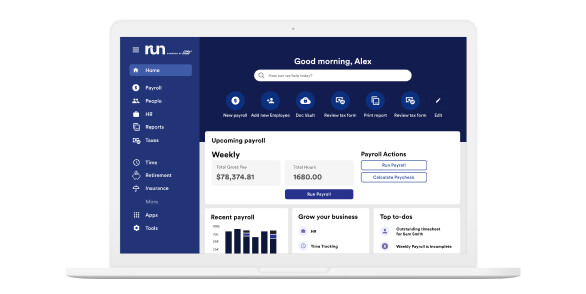
Get payroll, HR and so much more with ADP
ADP's comprehensive payroll solutions help you ensure accuracy, compliance, and efficiency – no matter your business size.
What is payroll as a percentage of revenue?
When budgeting for payroll, employers sometimes express the cost as a percentage of business revenue. This figure can be determined by dividing the total cost of payroll by the total revenue and multiplying the result by 100.
Formula: Payroll % = Total Payroll/Total Revenue x 100
For example, if annual business revenue is $600,000 and payroll expenses are $140,000, the payroll percentage would be:
$140,000/$600,000 x 100 = 23.33%
What percent of revenue should be spent on payroll?
The percentage of business revenue spent on payroll largely depends on how well the employer balances the labor available with the consumer demand. Hiring more employees than needed undoubtedly increases payroll costs. In these situations, a workforce management solution is beneficial because it enables employers to predict staffing needs more accurately.
Payroll as a percentage of revenue by industry
Industry also plays a factor in obtaining the ideal payroll percentage. Companies in highly automated sectors tend to have lower payroll costs than those in service-oriented fields, such as restaurants or retail stores.
What does a payroll budget include?
Employers running payroll generally must budget for employee compensation, payroll taxes, benefits, administration and workers’ compensation insurance.
In summary, a payroll budget may include:
- Employee compensation
Compensation paid to employees consists of not only salaries and hourly wages, but also any bonuses or commission payments they receive. - Payroll taxes
Employer tax dues include Federal Insurance Contribution Act (FICA) taxes, Federal Unemployment Tax Act (FUTA) taxes and state unemployment taxes. - Employer-sponsored benefits
Employer contributions to group health insurance plans, retirement savings plans and any other benefits extended to employees should be line items in a payroll budget. - Payroll administration
Payroll processes – printing checks, hiring a payroll administrator, outsourcing payroll to a third-party provider, etc. – incur costs. - Workers’ compensation
In most states, employers with at least one employee are required to purchase workers’ compensation insurance.
How to create a payroll budget
Creating a payroll budget involves tallying the workforce head count, estimating costs per person or position, organizing expenses by category, and reviewing the final numbers for accuracy.
Step 1: Tally the workforce size
A workforce may consist of full-time employees, part-time employees, temporary or seasonal workers, and independent contractors. In addition to the current staff, employers should also consider if they plan to hire more help in the near future.
Step 2: Estimate the payroll costs per person
Each workforce member incurs payroll expenses, some more than others. For instance, a salaried employee receiving full benefits will usually have a greater impact on payroll costs than a temporary employee earning minimum wage. Employers may also have to budget for overtime expenses if they have any nonexempt employees on staff.
Step 3: Organize expenses into categories
Segmenting a payroll budget by individual employees and expense types provides a holistic view of how employers’ money is spent. They can effectively identify which aspect of payroll – compensation, taxes, administration, etc. – costs the most and adjust as necessary to balance or reduce the budget.
Step 4: Review the budget
Once the budget is complete, employers should share it with accountants, department supervisors and other stakeholders to ensure it’s accurate. It may also help to compare the budget to the actual payroll expenses from the previous year and the projected revenue for the current year.
Tips to reduce the payroll percentage of revenue
Workforce reduction is one way to lower payroll costs, but it may not be a realistic option for growing businesses. Before taking drastic measures, employers should assess whether their payroll processes are as efficient as possible.
If deficiencies are found, it may be time to explore working with a full-service payroll and HR provider, like ADP. We can help clients find cost savings in the following areas: payroll administration, compliance and time and attendance.
Payroll administration
Payroll software automates tasks and eliminates manual effort, helping reduce labor costs associated with processing payroll. Paperless payroll also saves money that would have been spent on printing and shipping paychecks.
Compliance
Intelligent payroll technology can help employers avoid costly miscalculations and tax-filing errors. Additionally, the service may be backed by tax professionals who can assist with the challenges presented by changing regulations and minimize the risk of penalties.
Time and attendance
Time and attendance software provides visibility into actual hours worked versus scheduled hours, helping managers limit excess overtime and stay within budget. Some more advanced systems can also forecast labor needs and align schedules to the expected customer demand.
Frequently asked questions about payroll as a percentage of revenue
Can payroll automation tools reduce payroll costs?
Payroll automation eliminates manual data entry and saves time, which may translate into cost savings for employers. Solutions with automated error detection can also flag potential mistakes before they cause expensive tax penalties, further reducing payroll costs.
What is a good payroll-to-revenue ratio?
Employers generally aim for payroll-to-revenue ratios between 7.5 and 30%. However, financially healthy ratios can vary based on industry, business model, efficiency and automation, and the number of people supporting payroll.
This article is intended to be used as a starting point in analyzing the question “What percentage of revenue should payroll be?”and is not a comprehensive resource of requirements. It offers practical information concerning the subject matter and is provided with the understanding that ADP is not rendering legal or tax advice or other professional services.

Want more exclusive business insights like this delivered to your inbox?Subscribe now