insight
Employee goal setting
Last updated: January 8, 2026
This guide explains the employee goal-setting process – how to create goals, track employee progress and modify objectives, if necessary.
Key takeaways: Employee goal setting
- Goal setting is designed to help employees achieve positive results in either their current job or future career.
- Established goals can help further business pursuits, close skill gaps, improve employee performance and make work meaningful.
- Goal setting may be more effective by limiting the overall number of goals, ensuring they have structure and giving people time to consider how their aspirations align with organization-wide objectives.
- SMART – specific, measurable, attainable, relevant, timely – is a common structure for employee goals.
- Monitoring employee progress helps ensure goals adhere to quality standards and are achieved on time and within budget.
Most organizations want employees to be excited about goal setting. Eliciting such enthusiasm usually means giving them opportunities to advance their knowledge and skills or add new experiences to their resumes.
Sometimes, however, employee goal planning is confined to annual performance reviews. Managers and employees discuss whether expectations were met and set new goals, only to forget about them until the next year.
This set-it-and-forget-it approach doesn’t always make people feel like they are progressing in their careers. To truly drive employee performance and connect their efforts to the organization’s bottom line, employers must make goal setting a year-round process.
Table of Contents
What is goal setting for employees?
Goal setting is the process by which supervisors and employees create plans to achieve desired performance results. There are two distinct categories:
- Job-related goals are specific to someone’s current position. They are designed to make the employee's work more effective and valuable to the organization. A common job-related goal is to increase sales.
- Career-related goals sometimes blend with job-related goals, but they are broader, spanning a person’s entire working life. For instance, employees may not need a master’s degree for their current position, but it might benefit them in a future role. Creating plans to fulfill long-term aspirations is essential to helping people feel like they are valued as individuals and not just labor.
What are the benefits of setting goals for employees?
Goal setting is an important activity for organizations, which makes it equally important for employees. It can help employers:
- Further business pursuits and increase revenue
- Close knowledge and skills gaps within the organization
- Improve employee performance and engagement
- Make work meaningful by connecting employee goals to organizational objectives
Help your people further their natural abilities and potential
Don't just manage your people. Equip them with solutions that help them set and achieve meaningful goals.
How to set employee goals
Goal processes have a direct impact on whether or not the intended objective is accomplished. To help employees get better at setting goals, employers may want to follow these steps:
- Share department and organizational goals
- Give people time to think about their goals
- Limit the number of goals
- Ensure goals have structure
- Use change management strategies when necessary
Share department or organization-wide goals with employees
Goal setting should be a top-down approach, in which the organization’s goals are the department’s goals, and the department’s goals are the employee’s goals. Even if objectives are not ready for widespread distribution, organizations typically mention them in their budgets. Examples include increasing revenue, decreasing expenses or launching a new program.
Give employees time to think about their goals
Asking employees to create worthy goals on demand isn't realistic. Employers should give people ample time to reflect on the department or organization-wide objectives and how they can contribute to them.
Limit the number of employee goals
Changing everything at once would be overwhelming and ineffective. It’s the supervisor’s responsibility to ensure team members commit to a reasonable number of goals. The objectives need not be easy, but they must be realistic in terms of the time it takes to accomplish them. Employees will enjoy the goal-setting process more when their goals are achievable.
Structure staff goals appropriately
To be relevant, goals must have structure. One of the most common is SMART (specific, measurable, attainable, relevant, time-bound). This model can help establish success metrics and realistic time frames, as well as ensure buy-in from managers and employees.
Consider change management strategies
Sometimes organizations require employees to cease certain activities. Instead of simply telling employees to stop what they’re doing, employers can turn the directive into a goal. Doing so emphasizes the importance of the task and allows managers and employees to brainstorm ways to break normal habits or routines.
Consider, for example, an employer that wants employees to stop multitasking during meetings, responding to emails immediately or working through lunch. Team leaders and team members then strategize constructive alternatives, like scheduling X number of dedicated times per day to manage inboxes or taking 30-minute lunch breaks to recharge each day.
Setting goals and objectives for employees using SMART
SMART plans help organization steer their goal-setting process in the right direction. For each idea or goal, an employee needs to address all of the following steps:
- Specific – What's the objective?
- Measurable – How will success be measured?
- Attainable – What are the steps that will help achieve the goal?
- Relevant – Does the goal align with broader objectives at the department or organizational level?
- Timely – When will the goal be completed?
Tracking employee goal progress
Once set, goals must be continually monitored. This oversight helps ensure that they are completed on time and within budget and that the end result meets quality standards.
There are four ways for managers and employees to monitor goals:
- Hold people accountable
- Enlist a buddy, coach or mentor to assist with accountability
- Have teams hold each other accountable
- Leverage technology
Holding people accountable
Employees must hold themselves accountable for seeing a goal and any associated tasks through to completion. If someone cannot fulfill any of their assigned duties, the individual must renegotiate the commitment. Simply ignoring responsibilities is unacceptable.
Enlisting the help of coaches, buddies or mentors
An advisor can help employees stay focused when a goal requires difficult decisions or conversations. The coach or mentor might even push employees to the edge of their comfort zone in pursuit of an objective. For this strategy to be truly effective, however, the advisor and employee must know each other well and have mutual trust.
Instructing teams to hold each other accountable
A team approach to monitoring goals requires consensus. Each member of the team must agree to hold themselves and others accountable for goal-related tasks. Training may also be necessary to ensure team members know how to communicate feedback effectively.
Leveraging technology
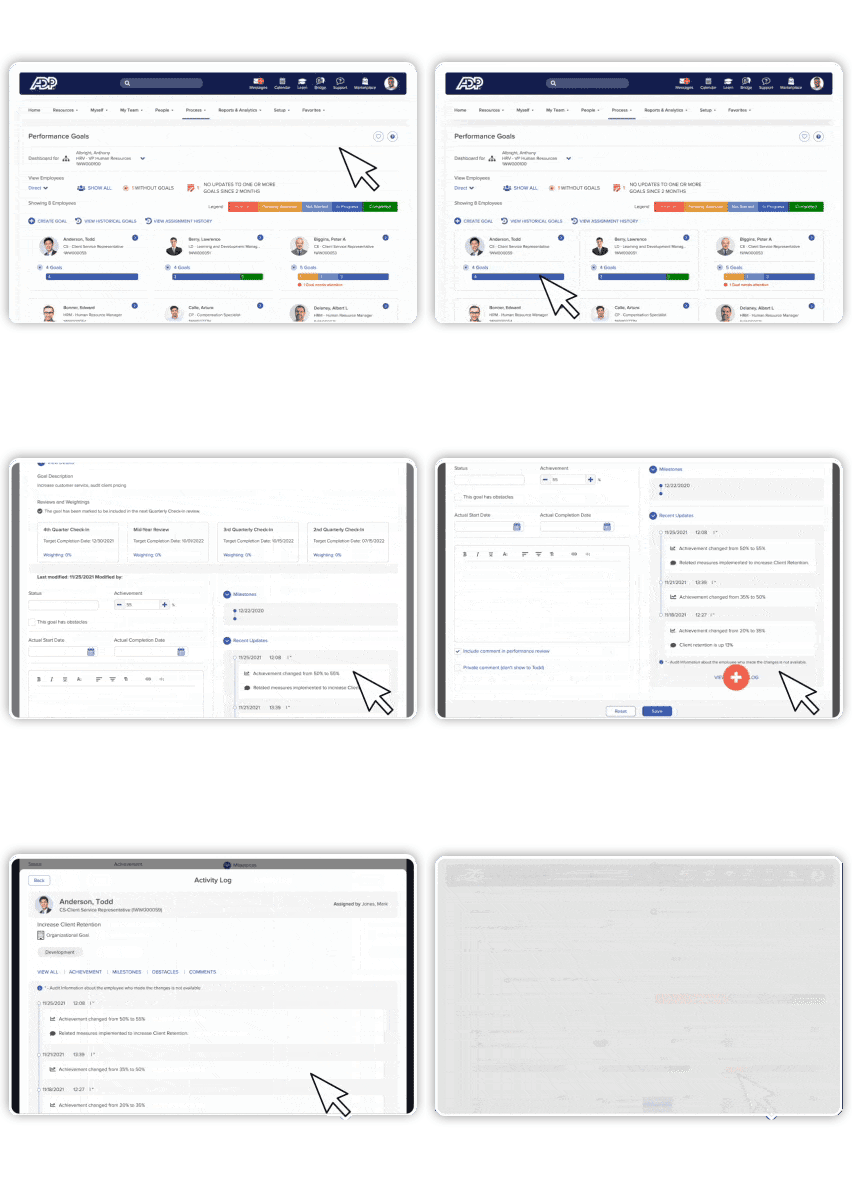
Goal setting and monitoring don’t have to be manual activities. Employers can use software to break goals down into smaller steps, which can then be tracked with reminders and reports.
Post-goal debriefing
At some point in the pursuit of a goal, employees should assess their progress and determine if the objective needs to be changed. Answering two questions can prove helpful in this regard:
- What went well?
Even in situations where an outcome is not as intended, there can be some positive moments to celebrate. - What could be done differently?
Whether success or failure, goals present opportunities for employees to learn from their mistakes and improve upon their achievements.
Modifying goals
Once a goal has been properly assessed, supervisors and employees must determine if it will be changed or abandoned in favor of a new goal. People and processes are essential at this stage.
People and goal setting
Setting objectives for employees requires people to push back occasionally and ask tough questions. If the right people aren't given an opportunity to listen and buy into a goal, they can unknowingly undermine its success.
Processes behind setting objectives for staff
Organizations typically set goals based on assumptions. When they change or modify an objective, they must confirm that the assumptions and any supporting data are still accurate. If this information is no longer favorable, employers may need to stop pursuing a goal.
This article is intended to be used as a starting point in analyzing employee goal setting and is not a comprehensive resource of requirements. It offers practical information concerning the subject matter and is provided with the understanding that ADP is not rendering legal or tax advice or other professional services.

Want more exclusive business insights like this delivered to your inbox?Subscribe now