
Any business that hopes to succeed needs an accurate way of tracking its finances. It must also correctly pay employees and file payroll taxes with government agencies on time. Some small business owners assume responsibility for these tasks, but they can become overwhelming as operations grow. One way to lessen the load is to hire a dedicated bookkeeper; another is to outsource payroll to a service provider. Making the right choice ultimately starts with understanding what bookkeeping and payroll management entails and assessing one’s capabilities.
Table of Contents
Bookkeeping and payroll software key takeaways
- Bookkeeping and payroll software can help small businesses manage invoicing, expenses, bank reconciliation, payroll and payroll taxes in one connected workflow.
- Many solutions also support direct deposit, employee self-service, reporting and integrations with accounting, HR or time tracking tools.
- Some providers combine bookkeeping and payroll software with expert support or services, giving businesses more flexibility as their needs become more complex.
What is bookkeeping?
Bookkeeping is how businesses record and manage all their financial transactions, including inbound payments from customers and outbound payments to third parties. This information can be documented using physical ledgers or software solutions. Either way, bookkeeping is vital to evaluating an organization’s financial health and making sound business decisions.
Bookkeeper duties
Bookkeeping responsibilities largely depend on the size of the company and its needs. In addition to simply tracking business transactions, bookkeepers may be asked to perform the following:
- Maintain bank documents and other financial records
- Create invoices, balance sheets and income statements
- Reconcile financial accounting statements
- Process payroll
- File tax returns
Payroll responsibilities
Bookkeepers sometimes run payroll, but this can become a job in itself if the business employs many people. In such cases, employers will often contract a payroll service provider to perform some or all of the following tasks on their behalf:
- Calculate gross and net wages
- Pay employees
- Remit tax payments to government agencies
- File tax reports with government agencies
- Maintain payroll records for the required lengths of time
- Support payroll compliance with applicable regulations
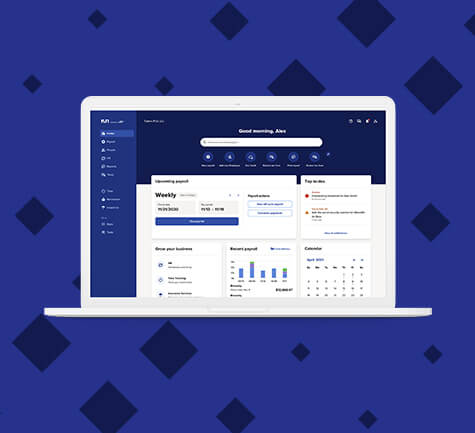
See how simple small business payroll can be.
Compare PackagesWhat’s the difference between payroll and bookkeeping services?
Services and software for bookkeeping and payroll can overlap, but they’re not the same. Bookkeeping focuses on recording transactions and maintaining financial records; payroll focuses on paying people and handling payroll taxes. Integrated bookkeeping and payroll software connects both functions in one platform, and service providers may use software to deliver some or all that work on a business’s behalf.
Bookkeeping and payroll software may include:
- Invoicing, expense tracking and financial reporting
- Bank reconciliation and transaction management
- Payroll processing, direct deposit and payroll tax filing
- Year-end forms such as Forms W-2 or 1099s
- Employee self-service and integration with time tracking, HR or accounting tools
There may be some crossover between bookkeeping and payroll software, particularly if the bookkeeper manages payroll. However, the two functions differ in scope. Bookkeeping tracks all business transactions, whereas payroll is limited to employee wage payments and payroll taxes.
Additionally, a bookkeeper’s primary responsibility is documentation. A payroll administrator’s job, in contrast, goes beyond record keeping and involves transactional activities, like paying employees and filing taxes with government agencies.
How to choose bookkeeping services
Employers who’ve decided that they don’t have the time or the expertise for bookkeeping may have to outsource the task to a third party. The following tips may help when evaluating a potential provider:
1. Determine the bookkeeping method
Most businesses use double-entry bookkeeping because it’s thorough, but some small businesses prefer single-entry bookkeeping due to its simplicity. Whichever method they choose, employers must ensure their bookkeeping service is compatible with it.
2. Integrate solutions whenever possible
Integrating bookkeeping with the existing accounting software and payroll software helps streamline the flow of information and minimizes data entry errors.
3. Ask about add-on services
In addition to traditional bookkeeping services, some providers offer payroll, HR assistance, tax preparation and more. Such add-on services may be charged incrementally.
4. Update the financial ledgers
If a business has fallen behind on its bookkeeping responsibilities, a service provider may offer to review historical financial documents and reconcile the ledgers. This service usually incurs an additional fee.
5. Establish communication tactics
Bookkeepers may offer services in person or virtually, e.g., by phone, email or web conference. Employers should discuss their preferred means of communication with the provider.

New business startup kit for payroll
Download NowFrequently asked questions about bookkeeping payroll services
How can bookkeeping and payroll software help small businesses
Bookkeeping and payroll can reduce manual work, improve accuracy and make it easier for small businesses to manage finances and payroll from one system or coordinated set of tools.
What features do the best bookkeeping services include?
Reputable bookkeepers generally will track financial transactions and run financial reports for their clients as part of their basic package. Value-added services, like employee payroll administration and tax preparation, may be available at extra cost.
Can I handle bookkeeping tasks on my own?
Bookkeeping does not require a degree or certification, so it’s possible for employers to do it on their own. However, keeping financial records up to date can become difficult as business operations grow in scale. At that point, employers may want to explore professional accounting and payroll services.
Would my business benefit from an online bookkeeping service?
An online bookkeeping service can help ensure that a business’s ledgers are always up to date, making it easier for owners to make sound financial decisions. Professional bookkeepers can also help employers save time and minimize errors.
How are bookkeepers and accountants different?
Accountants may perform some bookkeeping tasks, but they usually have more training and professional certifications than people who work solely as bookkeepers. As such, an accountant may be asked to interpret a bookkeeper’s work and evaluate the financial health of an organization.
How much does a bookkeeping service cost?
Professional bookkeepers may charge clients monthly or by the hour. Ultimately, the price depends on the business’s size and the breadth of bookkeeping services it requires. Averages range from less than $100 per month on the low end to thousands of dollars per month on the high end.
Do small businesses need bookkeeping?
Even the smallest businesses need bookkeeping to operate. Without up-to-date financial records, making important operational decisions or accurately filing tax returns with government agencies would be difficult.
Conclusion
Managing bookkeeping and payroll effectively is crucial for maintaining financial visibility, paying people accurately and helping meet compliance requirements. From tracking expenses to filing payroll taxes, having the right tools or service provider can help make these responsibilities easier to manage as your business continues to evolve.
Ready to spend less time on administrative and payroll tasks? Discover ADP’s small business payroll solutions designed to save time, reduce errors and support compliance, allowing you to focus more on what’s most important to you — growing your business.
This guide is intended to be used as a starting point in analyzing payroll bookkeeping and is not a comprehensive resource of requirements. It offers practical information concerning the subject matter and is provided with the understanding that ADP is not rendering legal or tax advice or other professional services.