

ADP SmartCompliance® Health Compliance
Navigate Affordable Care Act (ACA) compliance with confidence. Manage eligibility, IRS Forms 1095-C and 1094-C, and state employer reporting requirements through a connected, cloud-based solution that brings together data, visibility, and expert support.
Need help? Get support for existing clients

ACA Penalty Calculator
- Understand what may trigger ACA penalties and identify potential exposures.
- Generate a customized Employer Potential Penalties Impact Report to better assess your compliance posture.

ADP SmartCompliance Health Compliance 101
Learn how ADP Health Compliance helps identify and resolve ACA and state health compliance data issues throughout the year, before IRS and state furnishing and filing deadlines.
Take a proactive approach to ACA reporting and penalty avoidance
When you partner with ADP, your ACA compliance is supported by connected data flows, real-time visibility, and proactive insights designed to help keep your organization aligned with federal and state requirements.
Connect ACA data and surface issues earlier
Streamline ACA tracking and reporting through connected data and proactive capabilities, so you can:
- Integrate data sources – Automate data capture from payroll, HR, benefits systems and other systems of record
- Validate compliance data – Continuously identify and correct potential risks or anomalies before filing
- Automate SSN solicitation and tracking – Support IRS name or Social Security Number discrepancy resolution*
(*Available as an add-on.)

Use ACA insights to be proactive
Use real-time insights into ACA compliance status to identify issues earlier and prioritize actions before reporting deadlines.
- Access compliance status on demand – Review status anytime throughout the reporting year
- Identify potential issues early – Surface insights by employee, month or FEIN
- View forms year-round – Access Forms 1095-C and 1094-C throughout the reporting cycle
- Assess filing history – Review historical filing activity to help identify potential penalty exposure

Coordinate ACA requirements with greater consistency
With ADP Health Compliance, you gain a comprehensive approach to managing ACA requirements proactively, so you can:
- Calculate eligibility and affordability – Support full-time status, leaves of absence, rehires, safe harbors and minimum essential coverage thresholds by FEIN
- Manage federal and state reporting – Furnish and file Forms 1095-C and 1094-C with access to ACA specialists who help guide issue resolution
- Monitor regulatory requirements – Track federal and state ACA changes to help you prepare for what’s next

Discover the Smart(er) Way to Do Compliance
Move beyond disconnected tools and reactive tasks. A smarter compliance operating system connects compliance work across the entire worker lifecycle, transforming fragmented processes into intelligent, coordinated workflows.

Affordable Care Act (ACA) Compliance: The Devil’s in the Data
ACA compliance is complex, and penalties can be significant. As enforcement evolves, maintaining accurate and defensible data becomes even more critical. There is a better way — one that connects your data, workflows, and reporting in a more coordinated approach.
Read the ACA Compliance guide
Explore the challenges associated with managing ACA requirements and learn how ADP Health Compliance helps connect data, surface insights, improve visibility, reduce risk, and support filing readiness.

Health Compliance and ACA FAQs
What is ACA compliance?
ACA compliance refers to meeting the Affordable Care Act’s requirements for employer-sponsored health coverage and reporting. For applicable large employers, this includes offering affordable, minimum-value coverage to eligible ACA full-time employees, tracking eligibility and classification and reporting coverage information to the IRS using Forms 1095-C and 1094-C. Maintaining compliance helps reduce the risk of penalties.
Is health insurance coverage required for non-traditional workers under the ACA?
ACA requirements are based on hours worked, not job classification. Employers subject to the ACA must assess each employee’s hours of service to determine full-time status. Employees averaging at least 30 hours per week or 130 hours per month, including variable-hour or seasonal workers, may require coverage regardless of internal designations.
How well do you understand the ACA Employer Mandate?
The ACA Employer Mandate applies to employers with 50 or more full-time employees, including full-time equivalents. It requires offering coverage that, if affordable, provides minimum essential coverage, and meets minimum value requirements to at least 95% of full-time employees. Knowing and understanding who full-time (or full-time equivalent) employees are, offering timely and affordable health insurance coverage, documenting offers of health insurance coverage, and completing reporting requirements for both the IRS and applicable states based on differing requirements, rules, timelines and technology specifications is important to avoid penalties for non-compliance.
What is ACA reporting?
ACA reporting is the annual requirement for applicable employers to provide health coverage information to employees and the IRS. This includes furnishing Form 1095-C to employees and filing Forms 1095-C and 1094-C with the IRS, which summarize coverage offers and full-time employee counts. Some states also require separate health coverage reporting with distinct deadlines.
When are Form 1095-C's due to employees?
Employers must furnish Form 1095-C to eligible employees and file required information with the IRS by annual deadlines. Some employers may be eligible to use an alternative reporting method to furnish Form 1095-C to employees under which employers are no longer required to automatically furnish Form 1095-C to individuals. ADP has filed and furnished over 99 million Forms 1095-C nationwide, accounting for approximately 1 in 5 forms produced in the United States since 2015*.
*Source: ADP internal data.
When is ACA reporting due for 2026?
The IRS deadlines for ACA reporting are critical: the IRS deadline for Forms 1095-C to be furnished to employees is by March 2, 2026* (unless utilizing the alternative method of furnishing), while the IRS deadline to file Forms 1095-C and 1094-C is March 31, 2026. Additionally, applicable state reporting deadlines for 2025 follow a specific timeline as noted
- California: 2/2/2026 (furnishing to employees), 6/1/2026 (filing with state agency)
- New Jersey: 3/2/2026 (furnishing to employees), 3/31/2026 (filing with state agency)
- Washington, DC: 3/2/2026 (furnishing to employees), 4/30/2026 (filing with state agency)
- Rhode Island: 3/2/2026 (furnishing to employees), 3/31/2026 (filing with state agency)
*Final furnishing and filing dates have not been released by states for Tax Year 2027. Final deadlines are typically published by the RRS in the fall, with state-specific deadlines shortly after.
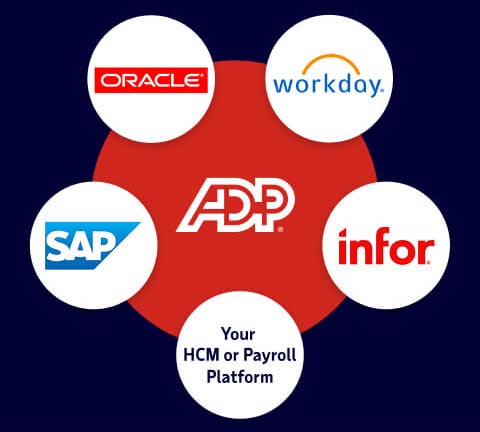
ADP Health Compliance integrates with your payroll, HR or ERP systems
Learn how to take advantage of ADP's ACA and state health compliance solutions, no matter which payroll, HR or ERP systems you use.
How ADP helps clients like you
The biggest benefit is the time saving and the system integration.
Sissy Reese PHR, SHRM-CP, HR Generalist – HRIS, Clinical Reference Laboratory

How ADP helps clients like you
ADP Health Compliance saves hours or days of time by managing 1095-C distribution with minimal review.
Dana Brundage Benefits Administrator, Dickinson Financial Inc
How ADP helps clients like you
ADP imports my data, and the calculations are seamless. I would not want to try this on my own.
Greg Green HR Benefits Solutions Lead, TriHealth
How ADP helps clients like you
The time spent reviewing data has dropped so much since implementing this module. Our confidence in the system is strong and so we feel there is very little validating we need to do to confirm accuracy.
Alison Gomez Supervisor US Benefits, World Wide Technology
How ADP helps clients like you
The software has eliminated manual data entry and saved countless hours.
Kailey Jones Benefits Administrator, Yokes Foods
Trending resources
Stay informed about evolving ACA requirements and emerging issues so you can prepare for what’s next.

Insight
ACA National Webinar Q&A Assets
Insight
Why Should You Care About the ACA?
Insight
Why Everyone Within Your Organization Should Advocate for ACA
Insight
ACA Data Can Support Business Decisions For Your Shifting Workforce
Insight
Is ACA Compliance Top of Mind Before You Receive an IRS Notice?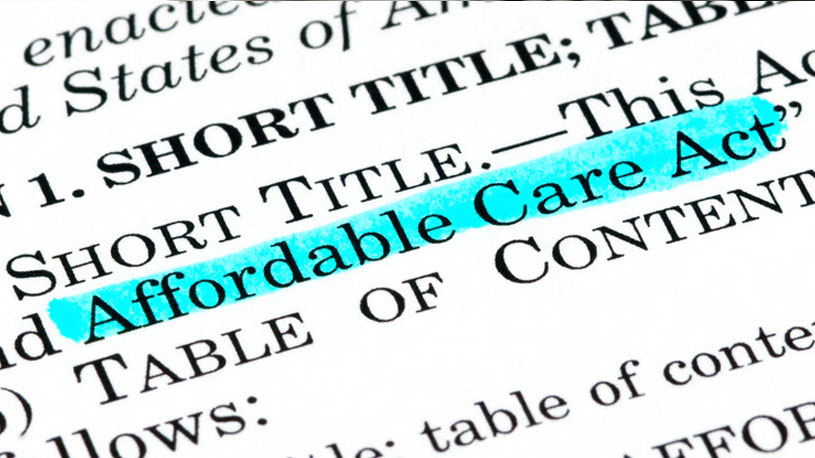
Insight
How Well Do You Understand The ACA Employer Mandate?Connect compliance across the worker lifecycle
ADP SmartCompliance helps you manage compliance workflows across the entire worker lifecycle through a connected operating system that brings together AI-powered intelligence, embedded ADP expertise, and coordinated workflows to create greater visibility, control, and compounding value.
Discover ADP SmartCompliance:
 Employment tax
 Payment solutions
 Unemployment claims
 Employment verification
 Tax credits
 Wage garnishments
 Health compliance